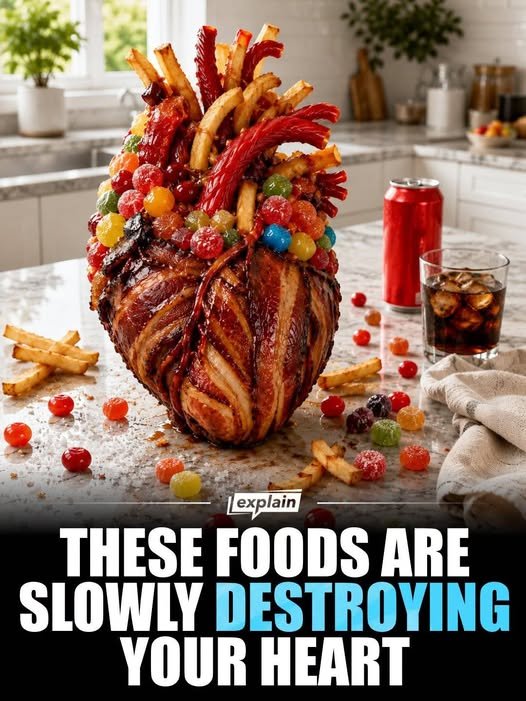
❤️ 7 Foods That Aren’t Really Okay for Your Heart—Especially When You Eat Them Often
Some of the foods Americans eat every week can quietly deliver large amounts of sodium, added sugar, saturated fat, and highly refined carbohydrates.
That does not mean one slice of pizza, one cookie, or one fast-food meal will suddenly damage your heart. Heart health is shaped by your overall eating pattern, portion sizes, frequency, activity level, sleep, smoking status, genetics, and existing medical conditions.
The real concern begins when these foods become everyday habits and start replacing fruits, vegetables, whole grains, beans, nuts, fish, and other minimally processed choices.
The American Heart Association recommends focusing on an overall eating pattern that emphasizes minimally processed foods, fruits, vegetables, whole grains, healthy protein sources, and unsaturated fats while limiting excess sodium, added sugars, saturated fat, and highly processed foods.
Here are seven popular foods and drinks your heart may not love as much as your taste buds do.
1. Bacon, Sausage, Hot Dogs and Processed Deli Meat
Bacon with breakfast, a deli sandwich for lunch, and hot dogs at the cookout may seem completely different—but they all belong to the processed-meat category.
Common examples include:
- Bacon
- Breakfast sausage
- Hot dogs
- Salami
- Bologna
- Pepperoni
- Corned beef
- Smoked sausage
- Packaged deli ham
- Some cured turkey and chicken slices
These foods can be high in sodium and saturated fat. The American Heart Association recommends choosing lean and unprocessed protein sources more often and limiting fatty or processed red meats.
Try This Instead
Replace processed meat more often with:
- Leftover roasted chicken
- Freshly cooked turkey
- Tuna or salmon
- Eggs
- Beans or lentils
- Hummus
- Tofu
- Lower-sodium canned fish
- Unsalted nuts and seeds
When buying deli meat, compare Nutrition Facts labels and choose the product with less sodium and saturated fat. Remember that words such as “turkey” or “chicken” do not automatically mean a product is low in sodium.
2. Regular Soda, Sweet Tea and Sugary Coffee Drinks
Sugary drinks are easy to consume quickly because they do not require chewing and may not feel as filling as solid food.
This category includes:
- Regular soda
- Sweet tea
- Lemonade
- Fruit punch
- Sweetened bottled tea
- Energy drinks
- Sports drinks
- Flavored coffee drinks
- Sweetened iced coffee
- Some smoothies and bottled juices
Regularly consuming too much added sugar can contribute to weight gain, type 2 diabetes, and heart disease. The American Heart Association specifically recommends limiting sugary beverages and other foods containing large amounts of added sugar.
A drink can look small while still containing several servings or a surprisingly large amount of added sugar.
Try This Instead
Choose:
- Cold water with lemon or lime
- Unsweetened iced tea
- Sparkling water
- Coffee with less syrup and sugar
- Water flavored with berries or cucumber
- Fat-free or low-fat milk
- A smaller serving of your usual sweet drink
You do not have to change everything overnight. Start by replacing one sugary drink each day with water or an unsweetened option.
3. Deep-Fried Fast Food
French fries, fried chicken, fried fish sandwiches, onion rings, mozzarella sticks, and similar foods may contain a combination of sodium, refined carbohydrates, and saturated fat.
The concern is not simply that a food was cooked in oil. The type of oil, portion size, breading, sodium content, how often the oil is reused, accompanying sauces, and the rest of the meal all matter.
A typical fried meal may also include a sugary drink, oversized fries, salty dipping sauces, and a dessert—turning one meal into a major source of sodium, added sugar, and calories.
Heart-health guidance recommends replacing foods high in saturated and trans fats with sources of unsaturated fat and choosing minimally processed foods more often.
Try This Instead
Choose:
- Grilled chicken instead of fried chicken
- Baked fish instead of battered fish
- A side salad instead of large fries
- Roasted potatoes
- Air-fried vegetables
- A smaller portion of fries shared with someone
- Mustard or salsa instead of heavy creamy sauces
- Water instead of soda
When you really want fried food, enjoy a reasonable portion and balance the rest of the meal with vegetables, lean protein, and an unsweetened drink.
4. Fatty Cuts of Meat, Butter and Full-Fat Dairy
Saturated fat is found in many animal-based foods and in certain tropical oils.
Common sources include:
- Fatty steaks
- Ribs
- Regular ground beef
- Chicken skin
- Butter
- Lard
- Heavy cream
- Whole milk
- Full-fat cheese
- Ice cream
- Cream-based sauces
Eating patterns high in saturated fat can raise LDL cholesterol, often called “bad” cholesterol, which is associated with a higher risk of heart disease and stroke.
This does not mean you must eliminate every food containing saturated fat. Portion size, frequency, and what you choose as a replacement are important.
Replacing saturated fat with unsaturated fats from foods such as nuts, seeds, fish, avocado, and non-tropical liquid vegetable oils is generally more helpful than replacing it with sugary or highly refined foods.
Try This Instead
Choose:
- Lean cuts labeled “loin” or “round”
- Skinless chicken or turkey
- Fish
- Beans and lentils
- Lower-fat ground meat
- Fat-free or 1% milk
- Lower-fat plain yogurt
- Olive, canola, soybean, or avocado oil
- Smaller portions of cheese
- Nuts or seeds in place of bacon bits
You can still enjoy steak or cheese—just avoid making large portions the center of every meal.
5. Frozen Pizza, Boxed Dinners and Instant Meals
Frozen pizza, boxed pasta, instant noodles, frozen entrées, and packaged meal kits can be convenient on busy nights.
However, some products contain large amounts of sodium, saturated fat, refined grains, and added sauces.
The American Heart Association lists foods such as frozen pizza and boxed pasta meals among common ultra-processed choices and recommends comparing labels for sodium, added sugar, and saturated fat.
Too much sodium can raise blood pressure and increase the risk of heart disease and stroke. Most dietary sodium comes from processed and restaurant foods rather than only from the salt shaker.
The American Heart Association recommends no more than 2,300 milligrams of sodium per day for most adults, with an optimal goal of no more than 1,500 milligrams per day for many adults. Individual needs can differ, especially for people who lose large amounts of sodium through sweat or have specific medical conditions.
Try This Instead
When buying a convenience meal:
- Compare sodium between brands
- Check the serving size carefully
- Choose meals with vegetables and whole grains
- Add frozen vegetables to increase volume
- Use only part of the seasoning packet
- Add beans or leftover chicken for protein
- Eat half now and save half for later
- Choose a thin-crust vegetable pizza
- Pair the meal with a large salad
A frozen dinner does not have to be forbidden. The goal is to select better options and avoid automatically eating multiple servings.
6. Donuts, Packaged Cookies, Pastries and Cakes
Donuts, snack cakes, toaster pastries, packaged muffins, cookies, and frosted desserts can contain a combination of:
- Added sugar
- Refined flour
- Saturated fat
- Sodium
- Large portion sizes
Many of these foods are easy to overeat because they are soft, sweet, convenient, and sold in multipacks.
Current heart-health recommendations encourage limiting added sugars, refined grains, saturated fats, and highly processed foods.
The issue is not having birthday cake occasionally. The bigger concern is turning sweet pastries into a daily breakfast, afternoon snack, and nighttime dessert.
Try This Instead
Choose:
- Oatmeal topped with berries
- Plain Greek yogurt with fruit
- Whole-grain toast with nut butter
- Fresh fruit with a few nuts
- A smaller dessert portion
- Homemade muffins with less sugar
- Dark chocolate in a reasonable serving
- Baked apples with cinnamon
- Frozen berries with yogurt
When buying packaged desserts, check the serving size and added-sugar line. A package that appears to be one portion may actually contain two or more servings.
7. Chips, Crackers, Instant Noodles and Salty Snack Foods
Potato chips, cheese-flavored snacks, pretzels, flavored crackers, instant noodles, microwave popcorn, and packaged snack mixes can add a significant amount of sodium to your day.
Some also contain saturated fat, refined grains, and seasonings designed to make it easy to continue eating beyond one serving.
The American Heart Association recommends reducing sodium and replacing highly processed foods that are high in sodium, saturated fat, or added sugar with minimally processed choices.
Eating directly from a large bag can make portion awareness especially difficult.
Try This Instead
Choose:
- Unsalted nuts
- Air-popped popcorn
- Fresh vegetables with hummus
- Apple slices with peanut butter
- Roasted chickpeas
- Whole-grain crackers with tuna
- Lower-sodium popcorn
- Fresh fruit
- Plain yogurt
- A pre-portioned serving of your favorite chips
Pour snacks into a small bowl instead of carrying the entire package to the couch.
Do You Have to Completely Stop Eating These Foods?
No.
For most people, the goal is not perfection or a permanent ban. The goal is to reduce how often these foods appear, control portions, and build most meals around more nourishing choices.
A heart-supportive eating pattern generally emphasizes:
- Vegetables
- Fruits
- Whole grains
- Beans and lentils
- Fish and seafood
- Nuts and seeds
- Lean, unprocessed protein
- Low-fat dairy
- Unsaturated vegetable oils
- Minimally processed foods
The American Heart Association emphasizes evaluating the complete dietary pattern rather than judging health by one food or nutrient alone.
A Simple Grocery-Store Rule
Before purchasing a packaged food, look at three lines on the Nutrition Facts label:
1. Sodium
Compare similar products and choose the lower-sodium option.
2. Added Sugars
Look beyond the total-sugars number and check how much sugar was added during processing.
3. Saturated Fat
Choose products with less saturated fat when practical, especially when the food will be eaten frequently.
The serving size matters. Every number on the label is based on that listed portion—not necessarily the amount you plan to eat.
Start with These Seven Easy Changes
You do not need to rebuild your entire diet in one day.
Try making one change at a time:
- Replace one daily soda with water.
- Choose grilled food instead of fried food once this week.
- Use leftover chicken instead of processed deli meat.
- Add vegetables to a frozen meal.
- Buy unsalted nuts instead of chips.
- Use olive oil more often than butter.
- Keep fruit available for sweet cravings.
Small choices made repeatedly can become a powerful long-term habit.
Important Reminder
Food cannot replace prescribed medication or medical care.
People with high blood pressure, high cholesterol, diabetes, kidney disease, heart disease, or other medical conditions may need personalized nutrition advice. Speak with a physician or registered dietitian before making major dietary changes or changing medication.
The goal is not to fear food.
The goal is to recognize which foods are best enjoyed occasionally—and which foods deserve a regular place on your plate.
📌 Save this list before your next grocery trip.
👇 Which one would be hardest for you to cut back on: bacon, soda, fried food, pizza, pastries, or chips? Tell us honestly in the comments!
#HeartHealthy #HeartHealth #HealthyEating #FoodsToLimit #NutritionTips #HealthyFoodChoices #LowerSodium #HealthyLifestyle #Cholesterol #BloodPressure #GroceryShopping #WellnessTips #HealthySwaps #AmericanHeartHealth #FoodFacts