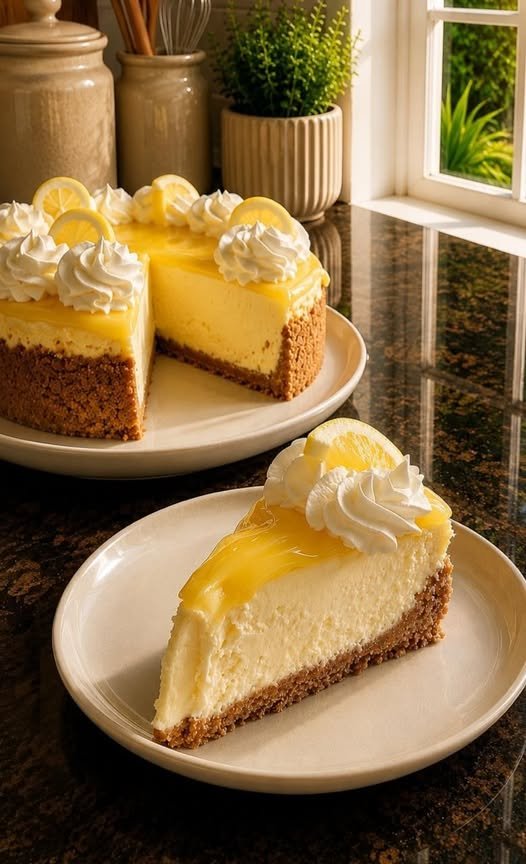
🍋🍰 Lemon Cheesecake — Creamy, Bright and Bursting with Fresh Citrus Flavor!
This homemade Lemon Cheesecake is rich, silky, refreshing, and filled with bright citrus flavor in every bite.
It begins with a buttery graham cracker crust, followed by a smooth cream cheese filling made with fresh lemon juice, fragrant lemon zest, vanilla, and sour cream. Once baked and chilled, the cheesecake develops a luxurious texture that is creamy without feeling overly heavy.
The fresh lemon flavor balances the sweetness beautifully, making this dessert perfect for spring celebrations, Easter, Mother’s Day, birthdays, bridal showers, summer cookouts, Sunday dinner, or any occasion that deserves something special.
Top it with whipped cream, lemon curd, fresh berries, or delicate lemon slices for a bakery-style dessert made right in your own kitchen.
⏱️ Prep Time: 30 minutes
🔥 Bake Time: 60–70 minutes
❄️ Cooling and Chilling Time: At least 6 hours
🕒 Total Time: About 7 hours 30 minutes
🍽️ Servings: 12–14 slices
🥧 Pan Size: 9-inch springform pan
Ingredients
For the Graham Cracker Crust
- 2 cups graham cracker crumbs
- ⅓ cup granulated sugar
- ½ cup unsalted butter, melted
- A small pinch of kosher salt
For the Lemon Cheesecake Filling
- 32 ounces full-fat block cream cheese, softened to room temperature
- 1¼ cups granulated sugar
- 1 cup full-fat sour cream, room temperature
- 4 large eggs, room temperature
- ⅓ cup fresh lemon juice
- 2 tablespoons finely grated lemon zest
- 2 teaspoons vanilla extract
- 2 tablespoons all-purpose flour or cornstarch
- ¼ teaspoon kosher salt
Optional Lemon Curd Topping
- ¾ cup prepared lemon curd
Optional Garnishes
- Fresh whipped cream
- Thin lemon slices
- Fresh strawberries
- Blueberries
- Raspberries
- Additional lemon zest
- Graham cracker crumbs
- White chocolate curls
- Fresh mint leaves
Instructions
1. Bring the Ingredients to Room Temperature
Remove the cream cheese, sour cream, and eggs from the refrigerator approximately 45–60 minutes before mixing.
Room-temperature ingredients blend more smoothly and help prevent lumps in the cheesecake filling.
Do not microwave the cream cheese until melted. It should be soft but still hold its shape.
2. Prepare the Oven and Pan
Preheat your oven to 325°F.
Lightly grease the bottom and sides of a 9-inch springform pan.
Place a round piece of parchment paper on the bottom for easier removal.
When using a water bath, wrap the outside of the pan tightly with two or three layers of heavy-duty aluminum foil. Make sure the foil reaches high up the sides so water cannot leak into the crust.
3. Make the Graham Cracker Crust
In a medium bowl, combine the graham cracker crumbs, granulated sugar, melted butter, and salt.
Stir until the crumbs are evenly moistened and resemble wet sand.
When you squeeze a small amount between your fingers, it should hold together.
4. Press the Crust into the Pan
Pour the crumb mixture into the prepared springform pan.
Use the bottom of a flat measuring cup or drinking glass to press the crumbs firmly and evenly across the bottom.
Press some of the crust approximately 1 inch up the sides when desired.
A tightly packed crust is less likely to crumble when the cheesecake is sliced.
5. Prebake the Crust
Bake the crust for 8–10 minutes.
Remove it from the oven and let it cool slightly while you prepare the filling.
Keep the oven set to 325°F.
Prebaking helps the crust remain firm beneath the creamy filling.
How to Make the Lemon Cheesecake Filling
6. Beat the Cream Cheese
Place the softened cream cheese in a large mixing bowl.
Beat with an electric mixer on medium-low speed for approximately 2–3 minutes, or until completely smooth.
Stop and scrape the sides and bottom of the bowl frequently.
Avoid using high speed because too much air can cause the cheesecake to rise rapidly and crack as it cools.
7. Add the Sugar
Add the granulated sugar gradually.
Beat on medium-low speed until the mixture is smooth and evenly combined.
Do not overmix.
8. Add Sour Cream and Flavorings
Add the sour cream, fresh lemon juice, lemon zest, vanilla extract, flour or cornstarch, and salt.
Mix on low speed just until combined.
Fresh lemon juice and zest provide the best flavor. Bottled lemon juice may taste sharper and less fresh.
When zesting the lemons, remove only the bright yellow outer peel. Avoid the bitter white layer underneath.
9. Add the Eggs
Add the eggs one at a time.
Mix on low speed only until each egg disappears into the batter before adding the next.
Do not continue beating once the eggs are fully incorporated.
Overmixing after adding the eggs introduces excess air and can lead to cracks.
10. Pour the Filling into the Crust
Pour the cheesecake filling over the prebaked crust.
Smooth the top gently with a spatula.
Tap the pan very lightly on the counter once or twice to release large air pockets.
Water-Bath Baking Method
A water bath helps the cheesecake bake gently and evenly. It also reduces the likelihood of cracks and dry edges.
11. Prepare the Water Bath
Place the foil-wrapped springform pan inside a large roasting pan.
Transfer the roasting pan to the oven.
Carefully pour hot water into the roasting pan until it reaches approximately halfway up the sides of the springform pan.
Avoid splashing water into the cheesecake.
12. Bake the Cheesecake
Bake for approximately 60–70 minutes.
The cheesecake is ready when:
- The outer edges appear set
- The center still has a gentle wobble
- The middle moves slightly like gelatin when the pan is nudged
- The center does not appear wet or liquid
Do not wait until the entire cheesecake is completely firm. It will continue setting as it cools.
13. Cool Gradually in the Oven
Turn off the oven.
Crack the oven door open several inches.
Leave the cheesecake inside for approximately 1 hour.
Gradual cooling helps prevent sudden temperature changes that may cause cracking.
14. Cool at Room Temperature
Carefully remove the cheesecake from the water bath.
Remove the foil from the outside of the pan.
Place the cheesecake on a wire cooling rack and let it cool to room temperature.
15. Chill Thoroughly
Cover the pan and refrigerate the cheesecake for at least 5–6 hours.
For the best texture and cleanest slices, chill it overnight.
Cheesecake needs plenty of refrigeration time to become firm, smooth, and easy to slice.
16. Remove from the Pan
Run a thin knife around the inside edge of the springform pan.
Release and remove the outer ring.
When the cheesecake sticks, dip the knife in warm water, wipe it dry, and carefully loosen the edge again.
Transfer the cheesecake to a serving plate when desired.
17. Add Lemon Curd
Spread the prepared lemon curd evenly over the chilled cheesecake.
Leave a small border around the edge for a decorative bakery-style appearance.
Lemon curd adds stronger citrus flavor, vibrant color, and a glossy finish.
18. Decorate and Serve
Decorate with whipped cream, lemon slices, berries, lemon zest, mint, or white chocolate curls.
For clean slices, dip a sharp knife into hot water and wipe it dry before each cut.
Serve cold or allow each slice to sit at room temperature for approximately 10 minutes for a softer texture.
How to Make Homemade Lemon Curd
Ingredients
- 3 large egg yolks
- ½ cup granulated sugar
- ⅓ cup fresh lemon juice
- 1 tablespoon lemon zest
- 4 tablespoons unsalted butter, cut into small pieces
- A small pinch of salt
Instructions
Whisk the egg yolks, sugar, lemon juice, lemon zest, and salt in a small saucepan.
Cook over medium-low heat, whisking constantly, until the mixture thickens enough to coat the back of a spoon.
Do not let it boil aggressively.
Remove from the heat and whisk in the butter one piece at a time.
Strain through a fine-mesh strainer.
Cover the surface directly with plastic wrap and refrigerate until cold.
Tips for the Best Lemon Cheesecake
✅ Use full-fat block cream cheese: It creates the richest flavor and firmest texture.
✅ Use room-temperature ingredients: This helps the filling blend without lumps.
✅ Mix on low speed: Too much air can cause cracks.
✅ Add eggs last: Mix only until incorporated.
✅ Use fresh lemons: Fresh juice and zest provide the brightest flavor.
✅ Do not overbake: The center should still wobble slightly.
✅ Cool gradually: Sudden temperature changes can cause cracking.
✅ Chill overnight: The texture improves significantly after a full night in the refrigerator.
✅ Use a hot, clean knife: This produces neat bakery-style slices.
What If You Do Not Have a Water Bath?
You can bake the cheesecake without placing the pan directly in water.
Place a large roasting pan filled with hot water on the oven rack below the cheesecake.
The steam creates a more humid baking environment and may help prevent cracks.
Bake the cheesecake on the rack above it.
The result may not be quite as smooth as a traditional water bath, but it still works well.
How to Prevent Water from Leaking into the Crust
Use several layers of heavy-duty foil around the springform pan.
You can also place the springform pan inside a slightly larger cake pan, then place both pans in the water bath.
This creates an additional barrier between the water and the springform pan.
Why Did My Cheesecake Crack?
Common reasons include:
- The filling was overmixed
- Too much air was incorporated
- The cheesecake was overbaked
- The oven temperature was too high
- The cheesecake cooled too quickly
- The sides were stuck to the pan
- A water bath was not used
A cracked cheesecake is still delicious.
Cover the surface with lemon curd, whipped cream, berries, or powdered sugar.
Why Is My Cheesecake Lumpy?
The cream cheese may have been too cold.
Beat softened cream cheese by itself until completely smooth before adding sugar or other ingredients.
Once the eggs have been added, avoid trying to remove lumps by mixing aggressively.
Why Is My Cheesecake Too Soft?
Possible causes include:
- It was underbaked
- It did not chill long enough
- Reduced-fat cream cheese was used
- Too much lemon juice was added
- The measurements were changed
- It was sliced while still warm
Refrigerate a soft cheesecake overnight before deciding whether it has fully set.
Why Is My Crust Soggy?
A soggy crust may be caused by:
- Water leaking through the foil
- Too much melted butter
- The crust was not prebaked
- The cheesecake was stored while still warm
- The lemon topping released excess moisture
Wrap the pan carefully and allow the cheesecake to cool before covering.
No-Bake Lemon Cheesecake Variation
For a no-bake version, use:
- 16 ounces full-fat block cream cheese
- 1 cup powdered sugar
- ⅓ cup fresh lemon juice
- 1 tablespoon lemon zest
- 1 teaspoon vanilla
- 1½ cups heavy whipping cream
Beat the cream cheese and sugar until smooth.
Add the lemon and vanilla.
Whip the heavy cream separately to stiff peaks.
Fold the whipped cream into the filling.
Spread over a chilled graham cracker crust and refrigerate for at least 6 hours.
This version has a lighter, mousse-like texture.
Lemon Blueberry Cheesecake
Fold 1 cup fresh blueberries into the cheesecake batter before baking.
Toss the blueberries with 1 teaspoon flour to help prevent them from sinking.
Top the chilled cheesecake with additional blueberries and lemon curd.
Lemon Raspberry Cheesecake
Swirl ½ cup raspberry preserves through the filling before baking.
Use a knife to create gentle swirls without mixing completely.
Top with fresh raspberries.
Lemon Strawberry Cheesecake
Top the chilled cheesecake with sliced strawberries and lemon curd.
You can also spread a thin layer of strawberry preserves under the lemon curd.
Lemon Coconut Cheesecake
Add:
- ½ teaspoon coconut extract
- ½ cup sweetened shredded coconut
Top with toasted coconut and lemon zest.
Lemon White Chocolate Cheesecake
Add 6 ounces melted and slightly cooled white chocolate to the filling before adding the eggs.
Reduce the sugar slightly because white chocolate adds sweetness.
Lemon Cheesecake Bars
Line a 9-by-13-inch pan with parchment paper.
Prepare the crust and filling as directed.
Bake for approximately 35–45 minutes.
Chill thoroughly and cut into squares.
This version is perfect for potlucks and larger gatherings.
Mini Lemon Cheesecakes
Line a muffin pan with paper liners.
Add approximately 1 tablespoon of crust mixture to each liner and press firmly.
Divide the filling among the cups.
Bake at 325°F for 18–22 minutes.
Cool and refrigerate before decorating.
This recipe makes approximately 20–24 mini cheesecakes.
Crust Variations
Vanilla Wafer Crust
Replace graham crackers with finely crushed vanilla wafers.
Shortbread Crust
Use crushed shortbread cookies mixed with melted butter.
Golden Sandwich Cookie Crust
Use crushed golden sandwich cookies and reduce the amount of added butter.
Ginger Cookie Crust
Use crushed gingersnap cookies for a warm, lightly spiced contrast to the lemon filling.
Gluten-Free Crust
Use gluten-free graham crackers or cookies.
Check every ingredient label when serving someone with celiac disease or a serious gluten sensitivity.
What to Serve with Lemon Cheesecake
Serve each slice with:
- Fresh strawberries
- Blueberries
- Raspberries
- Whipped cream
- Lemon curd
- Vanilla ice cream
- White chocolate curls
- Shortbread cookies
- Hot coffee
- Iced coffee
- Black tea
- Sweet tea
- Sparkling water with lemon
Make-Ahead Instructions
Lemon Cheesecake is an excellent make-ahead dessert.
Bake it up to 2 days before serving.
Keep it covered in the refrigerator.
Add whipped cream, fruit, and decorative garnishes shortly before serving.
The flavor and texture often improve after the cheesecake rests overnight.
Storage Instructions
Cover the cheesecake tightly or store individual slices in airtight containers.
Refrigerate for up to 5 days.
Do not leave cheesecake at room temperature for more than 2 hours.
During outdoor gatherings above 90°F, return it to refrigeration within 1 hour.
Can You Freeze Lemon Cheesecake?
Yes.
For the best result, freeze it before adding whipped cream, berries, or lemon slices.
Freeze the Whole Cheesecake
Chill the cheesecake completely.
Place it in the freezer uncovered until the surface becomes firm.
Wrap it tightly in plastic wrap and aluminum foil.
Freeze for up to 2 months.
Thaw overnight in the refrigerator.
Freeze Individual Slices
Place slices on a parchment-lined tray and freeze until firm.
Wrap each slice securely and place it in a freezer-safe container.
Thaw in the refrigerator before serving.
Why You’ll Love This Recipe
🍋 Bright, fresh lemon flavor
🍰 Rich and creamy texture
🥧 Buttery graham cracker crust
✨ Elegant bakery-style appearance
🎉 Perfect for holidays and celebrations
🧊 Excellent make-ahead dessert
🍓 Delicious with berries and whipped cream
👨👩👧👦 A beautiful family favorite
This Lemon Cheesecake is creamy, refreshing, elegant, and packed with enough citrus flavor to brighten any dessert table.
One smooth, tangy bite—and it may become your new favorite cheesecake!
📌 Save this recipe for Easter, Mother’s Day, birthdays, or your next family gathering.
👇 Would you top yours with lemon curd, whipped cream, strawberries, blueberries, or raspberries? Tell us in the comments!
#LemonCheesecake #CheesecakeRecipe #LemonDessert #HomemadeCheesecake #SpringDesserts #EasterDessert #SummerDesserts #CreamyDessert #GrahamCrackerCrust #MakeAheadDessert #BirthdayDessert #BakingFromScratch #DessertIdeas #CheesecakeLovers #RecipeOfTheDay